


It was supposed to be a turning point. On 1 May 2026, the Renters' Rights Act came into force — ending no-fault evictions, scrapping short-term tenancies, and capping rent rises to once a year. For millions of people renting in England, it looked like the law had finally caught up with reality. After years of being handed two months' notice for no reason, having landlords squeeze in rent rise after rent rise, or living in fear of complaining about a damp wall, renters finally had rights that meant something.
Seven weeks on, I've been digging into the data. And while the new law does bring real protections, the picture it reveals is more complicated — and for some renters, more worrying — than the headlines suggest.
What the New Law Actually Changed
Let me start with what the Renters' Rights Act genuinely does, because it is significant.
Section 21 — the "no-fault eviction" — is gone. Landlords can no longer hand you a notice to quit just because they feel like it, or because you asked about a dripping tap. If a landlord wants their property back, they now need a legal reason: they're selling, they want to move back in, you're in serious rent arrears, or there's antisocial behaviour. These grounds are set out in law (Section 8 of the Housing Act) and trying to serve an old-style Section 21 notice now carries a civil penalty of up to £7,000.
Assured Shorthold Tenancies are also gone, replaced by rolling periodic tenancies. In practice this means your tenancy runs indefinitely — month to month, unless ended by you or, lawfully, by your landlord. And rent rises are now limited to once per year, at open market rates, with disputes going to a new private rented sector Ombudsman.
The Chartered Institute of Housing called this "a landmark moment for renters." Shelter, which has campaigned against no-fault evictions for years, welcomed it too. And they're right — these are real protections that matter.
But here's where it gets uncomfortable...
The Supply Problem the Law Can't Fix
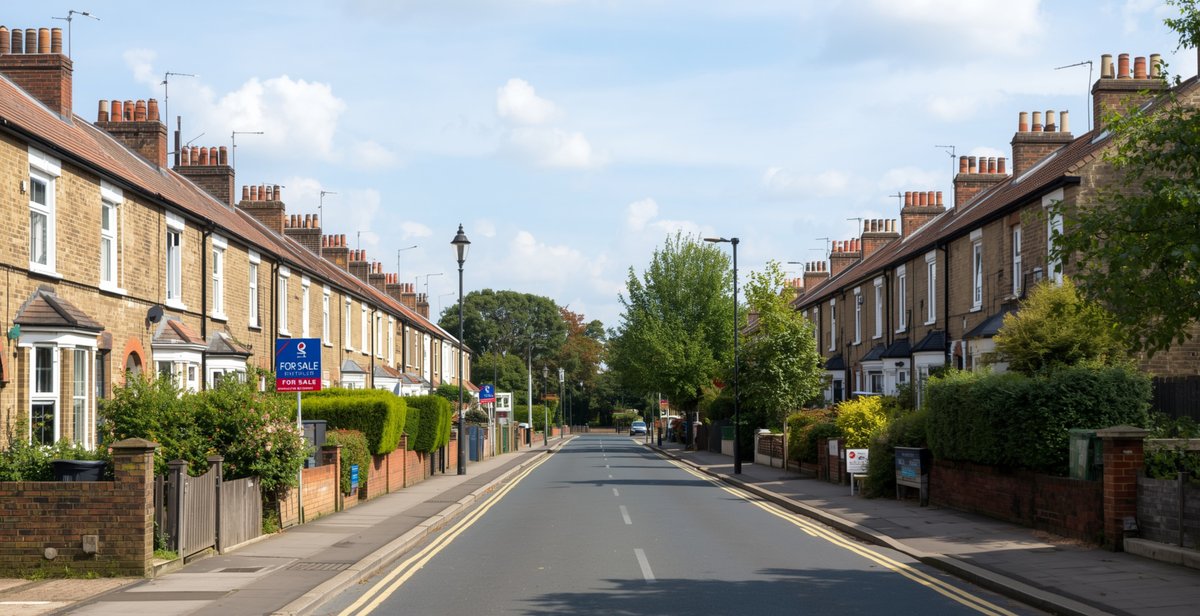
At the same time as these protections came in, the rental market has been quietly losing homes, a lot of homes in fact.
According to research published by Property Portfolio Investor, an estimated 93,000 buy-to-let landlords exited the private rented sector in 2025. A further 110,000 are projected to leave in 2026 — with around 65,000 of those exits driven directly by the new legislation. That works out to roughly 220,000 rental homes potentially disappearing from the market this year alone.
Not every landlord is fleeing in panic — a more recent survey of 1,200+ landlords found that 24% are currently selling, down from 35% in September 2025, so there are signs the exodus may be slowing. And the December 2025 English Private Landlord Survey found that 31% plan to reduce their portfolio, with 16% intending to exit entirely within two years.
When these properties sell, they mostly move into owner-occupation. They leave the rental pool. And with 25% fewer rental homes on the market now than before the pandemic — across every single UK region — that supply squeeze was already serious before a single additional landlord decided enough was enough.
Richard Donnell, Executive Director of Research at Zoopla, put it plainly in their June 2026 Rental Market Report:
"Falling demand has not reduced rents because the number of homes available to rent remains below pre-pandemic levels across every region. New investment in private rented homes remains low."
The Postcode That Changes Everything
Here's the part that bothers me. When you look at the national rental figures, things almost sound reasonable. The ONS reported average UK rents of £1,381/month in April 2026 — up 3.5% year on year. Zoopla's report for June 2026 puts the average for new lets at £1,321, with 2.1% annual growth. Wages are growing at 4%, meaning earnings are outpacing rents for the third year running.
But if you strip back the national average and you find two very different rental markets.
In expensive areas — Birmingham, Nottingham, Bournemouth — rents are actually falling slightly. -1.1%, -0.9%, -1.7% respectively. The market has hit its ceiling, and tenants are starting to have a little leverage.
In affordable areas, the opposite is happening. Carlisle is seeing 9.1% rent growth. Kilmarnock, 9%. Halifax, 6.5%. These are towns where average rents are around £700 a month — roughly half the national average. Places that were supposed to be the escape valve: cheaper, quieter, more liveable. Zoopla's data shows that in areas where average rents sit below £750/month, growth is running at nearly 5% per year — more than double the national figure.
The North East, which has the lowest average rents in England, saw some of the fastest growth in the ONS figures to April 2026. London, at the other end of the affordability spectrum, registered the lowest growth rate at just 2%.
What's happening is pretty straightforward, if deeply unfair. Renters who've been priced out of expensive cities are moving to cheaper areas. That extra demand is landing in markets with thin supply and little cushion. The tenants there — who were already on tighter budgets — are now facing the steepest rises.
The Safety Net Has a Very Big Hole
For renters on lower incomes — those relying on Universal Credit or Housing Benefit — there's an additional squeeze that the Renters' Rights Act cannot touch.
Local Housing Allowance (LHA) is the government benefit that helps cover private rent. It's calculated based on local market rents. The problem is it was last updated in September 2023 and has been frozen since. According to the Joseph Rowntree Foundation's 2026 report, UK rents have risen 16% since that September 2023 baseline — and the benefit hasn't moved.
The consequences are stark. Only 2.5% of private rental listings in England are currently affordable at LHA rates — down from 10–16% just four years ago. Forty-one per cent of private renters on Universal Credit or Housing Benefit say they can't comfortably cover their housing costs. Renters in the lowest income quintile are spending an average of 63 pence in every pound of household income on rent.
Nathan Emerson, CEO of Propertymark, speaking after the April 2026 ONS data was released, said: "Without measures that support investment in the private rented sector, affordability pressures are likely to continue."
He's right, but the supply side of the problem is only half of it. The benefit side — the gap between LHA and market rents — is growing wider by the month.
## What About Buying?
I know a lot of readers may be the renters who dream of getting onto the housing ladder. The mortgage picture is slowly improving, but it's slow.
The Bank of England held the base rate at 3.75% for the fourth time in a row on 18 June 2026. Lenders have been cautiously cutting their fixed rates — HSBC currently has a 5-year fix at 4.40% and a 2-year fix at 4.35% (as of 21 June). There are no sub-4% fixed deals available right now; if you want below 4%, you'd need a tracker, which comes with rate risk.
For renters in London, this is particularly painful. Zoopla recorded a 6% increase in rental demand in London** in the four weeks to 31 May 2026 — the only region to see a rise. Higher mortgage costs keep first-time buyers in the rental market longer, which pushes rents up, which makes saving for a deposit even harder. It's a circular trap that's been running for years and hasn't fully broken.
What Can You Actually Do Right Now?
If you're renting in England, here's what the new law means in practice:
Your landlord cannot evict you without a legal reason. If you receive a Section 21 notice, it's now invalid. Report it to your local council — your landlord may face a civil penalty.
Your landlord can only raise your rent once a year, and it must be at the open market rate for your area. If you think the proposed rise is above market, you have the right to challenge it through the First-tier Tribunal (Property Chamber) — without having to leave your home.
If you're on benefits and struggling with the gap between LHA and your rent, ask your local council about Discretionary Housing Payments (DHPs). These are limited funds, but they exist specifically to cover shortfalls.
If you're thinking about buying, it's worth running the numbers. Use the compound interest calculator on Core9 Hub to model how much a deposit could grow over a few years if you overpay your ISA instead of spending it. With rates at 4.35–4.40% for fixes, the maths on buying vs. renting has shifted — but it depends heavily on your deposit size and location.
Final Thoughts
The Renters' Rights Act is a genuine step forward: no more no-fault evictions, rolling tenancies, and one rent rise per year — these are meaningful protections.
But the law cannot fix supply. With 25% fewer rental homes than pre-pandemic and an estimated 220,000 homes projected to leave the market in 2026, competition for what's left remains intense.
The hardest-hit renters are in places you might not expect: affordable northern and Scottish towns like Carlisle (9.1%), Kilmarnock (9%), and Halifax (6.5%) — where supply is thin and budgets are tightest.
The LHA benefit cap hasn't moved since September 2023, even as rents have risen 16%. Only 2.5% of English rental listings are now affordable at LHA rates.
Mortgage rates are falling slowly (best 5-year fix: 4.40%), but first-time buyers — especially in London — remain locked in the rental market, sustaining demand.
Know your new rights: challenge unfair rent rises via tribunal, report invalid eviction notices, and ask about Discretionary Housing Payments if you're on benefits.
This article is here to give you some information and is for educational purposes only. It is not meant to give you financial advice. It is always a good idea to chat with a financial adviser who knows you well and can help you make the best decisions for your situation.
Sources
https://theintermediary.co.uk/2026/05/private-rents-rise-by-3-5-in-april-2026-ons/
https://www.zoopla.co.uk/discover/property-news/rental-market-report/
https://propertyportfolioinvestor.co.uk/news/landlord-exodus-220000-rental-homes-prs-2026/
https://www.property118.com/landlord-exodus-slows-but-uncertainty-remains/
https://www.gov.uk/guidance/renters-rights-act-overview-for-tenants
https://www.jrf.org.uk/housing/under-pressure-the-affordability-challenges-facing-private-renters
https://www.kaeltripton.com/latest/bank-of-england-base-rate-june-2026-holds/


