


Most of us know we should budget, but for many UK households, money feels like it just happens to them. Bills come in, the mortgage is paid and the supermarket bill is more than expected, leaving little at the end of the month. Does this sound familiar?
The truth is, budgeting isn't about limiting your life. It's about understanding your money well enough to make thoughtful choices with it. And those choices, when made consistently, can turn financial stress into financial freedom.
This isn't get rich quick this is get rich slowly, take control and get your budget right to allow you to get some money behind you, a car repair or broken central heating doesn't need to wipe your bank account out or end up on a credit card, it just needs a little planning, the same planning that took me over 50 years to learn the hard way.
The State of UK Household Finances
Before we explore solutions, it's helpful to understand where most UK households are financially.
The Office for National Statistics (ONS) reports that the median household disposable income in the UK was £36,700 in the financial year ending (FYE) 2024, which is about £3,058 per month after tax. For the poorest fifth of households, the median income was just £16,800, which is less than half the national median.
However, income alone doesn't tell the whole story. What households do with that income is what really matters.
Where the Money Goes
ONS family spending data for 2024/25 shows how the average UK household spends its weekly budget:
Housing, fuel and power: £118.40 per week (18% of spending) — the biggest expense
Transport: £96.40 per week (14%)
Food and drinks, including non-alcoholic options, are on the rise, with costs increasing by 5% each year.
These three categories alone make up about 45% of what most households spend before you consider clothing, leisure activities, subscriptions, childcare or any of the other expenses we face daily.
The Savings Gap: Where Many People Fall Short
Here's where things get a bit uncomfortable. Even though the average UK adult earns £36,700, the savings situation is quite different:
1 in 10 UK adults have no savings at all, according to a 2025 FCA Financial Lives Survey.
1 in 6 UK adults (around 8.4 million people) have no savings account.
21% of people have less than £1,000 saved—basically no cushion for unexpected expenses.
Over a third of households (36%) had to use their savings just to cover everyday costs in the six months leading up to November 2024.
Average UK Savings by Age Group
The average UK person has just over £16,000 in savings, but this average is heavily influenced by older, wealthier savers. The picture by age group is more telling:
18–24~£12,756
25–34~£9,357
35–44~£22,445
45–54~£20,999
55–64~£29,000+65+~£31,177
You might notice a dip in the 25–34 age group. This is often when people are juggling rent, a first mortgage, starting families and paying off student loans—all at once! It's also when saving and investing can really pay off in the long run, as money saved in your late 20s and early 30s has decades to grow.
Interestingly, younger savers actually save a bit more of their income than older people. For example, those aged 25–34 save about 14.4% of their earnings on average, while those aged 45–54 save just 9.6%. The catch is that even though you're saving less, you're still leaving with a smaller amount overall.
The Debt Side of the Ledger
But savings are just one part of the story. UK household debt has been increasing steadily:
The average consumer debt (credit cards and personal loans) was £8,304 per household at the end of 2025
Including mortgages, the average UK household owes around £65,500
Excluding mortgages, the average total household debt was around £18,392 heading into 2026—that's a 98% increase over the past ten years
The household debt-to-income ratio was 117.5% in Q4 2025, meaning the average household owes more than a year's income
These aren't just numbers. At current interest rates, paying £8,000 in credit card debt at a typical APR of 24% costs over £1,900 a year in interest alone—money that just disappears.
Simple practical thinking
That's why budgeting is so important. You can't build wealth while paying high-interest debt. Knowing exactly what you owe, what it costs you each month and what you can realistically pay down is the foundation of any good financial plan.
How Budgeting Puts You Back in Control
A household budget isn't a punishment—it's a guide. It shows you three things:
Where your money actually goes (which is often different from where you think it goes)
Where there's waste or overspending—the subscriptions you forgot about, the energy tariff you haven't reviewed, the food budget that creeps up each month
What's left—and what you can do with it on purpose
Even small savings can make a big difference. If you save an extra £200 each month—about £46 a week, which many people can do if they keep track of their spending—that adds up to £2,400 a year. Over ten years, before any investments grow, that's £24,000. If you invest in a stocks and shares ISA or something similar, the amount could be even higher.
From Budgeting to Investing: The Power of Compound Growth
This is where we move from managing money to growing it.
Once your household budget is in order—debts are under control, you have an emergency fund (usually three to six months of essential expenses) and you have some extra money each month—you're ready to start investing for the future, on a personal note I actually didn't save anything myself before I started investing, these financial decisions are all personal choice, but I decided as a 50 something man who had been useless with money his whole life I needed to just get started and stop kicking the proverbial can down the road!
The more I read and watched on YouTube with great creators like Damien Talks Money who was the catalyst for me (check some of my favourite videos in our videos section of the site) the more I realised there were just too many great reasons to invest instead of just keeping cash savings.
according to JP Morgan Asset Management, over 25 years, cash savings in low-interest accounts could lose about 58% of their value to inflation. That means today's £1.7 trillion in UK cash savings would only be worth the equivalent of just £720 billion today,
UK house prices have gone up by 73% over the last ten years, showing how powerful owning assets can be in the long run.
At the time of writing Tax-efficient options like Stocks & Shares ISAs let you save up to £20,000 each year from capital gains and income tax, which can help your returns grow even more.
The idea of compound growth means that the longer you invest, the better. If you invest £5,000 at age 30 and it grows at 7% each year, it will be about £38,000 by age 65 (Have a play around with our compound interest calculator its fun seeing how compounding works!). If you wait until age 40 to invest the same amount, it will only grow to around £19,000. Every year you wait has a real cost.
A Simple Way to Start: The 50/30/20 Rule
For families just starting to budget, the 50/30/20 rule is a simple way to get started:
50% of your income goes to needs.
30% goes to wants.
20% goes to savings and investments.
Think of your take-home pay like a pie:
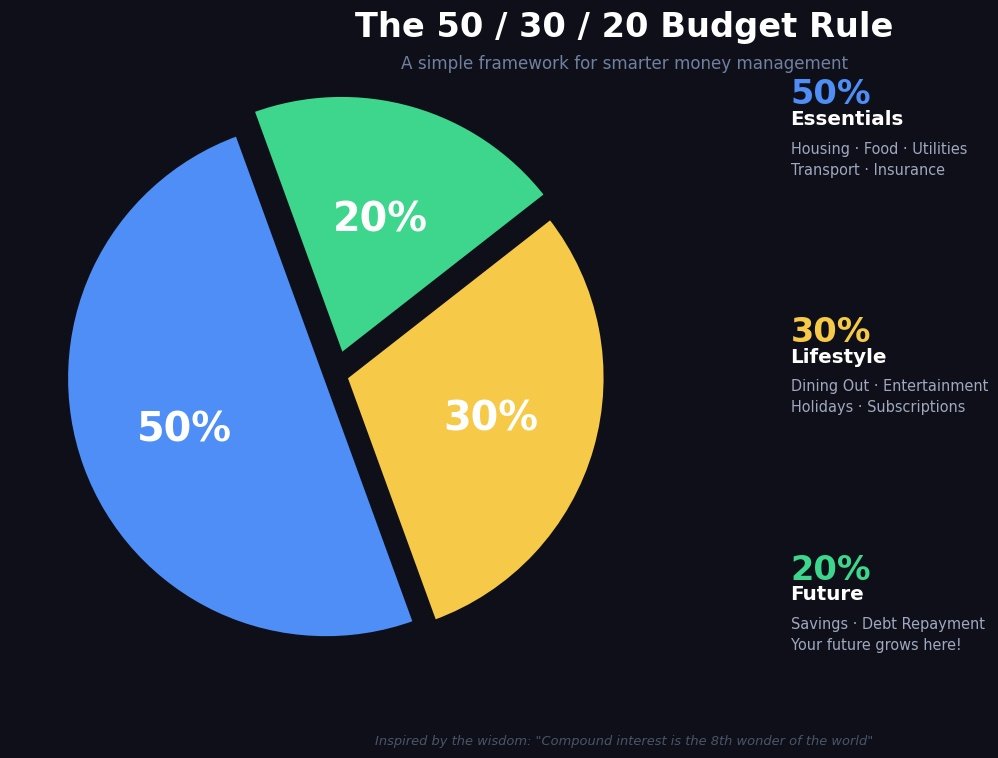
If you earn £36,700 a year in the UK, that 20% would be about £611 each month for savings, investments or paying down debt. As you pay off your debts, you can gradually move more of that 20% into investments.
Of course, every family is different, especially in expensive places or if you earn less, where your needs take up more of your money. But the main idea is to prioritise saving first, then spend what's left, rather than spending first and saving what's left.
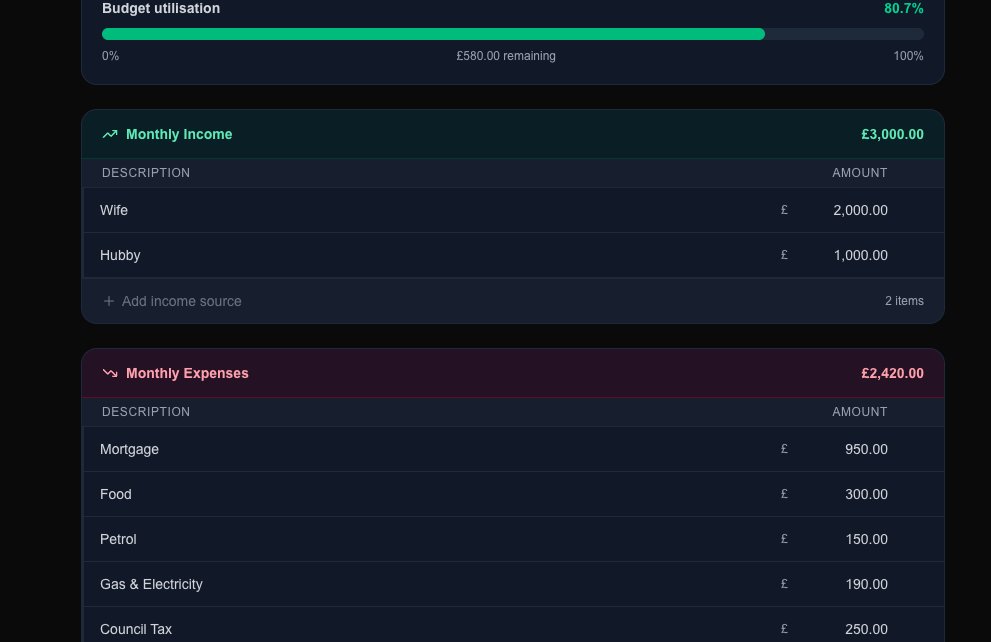
Using a Budgeting Tool
The free budgeting tool on our site is here to help you make this easy. Just input your income and sort your expenses, and you'll get a clear picture of your finances right away—the first step to getting in control.
Knowing your numbers is just the beginning. But you need to know where you are to plan your way forward.
Final thoughts
The average UK household earns £36,700 a year (FYE 2024), but just having money isn't enough to be financially healthy.
About one in ten UK adults don't have any savings at all, and one in six don't have a savings account.
The average household has £8,304 in debt, which costs thousands each year in interest.
Younger savers (25–34) save more of their income, but they don't save as much overall, so being disciplined early is really important.
Budgeting helps you save money, and investing that money over time can really build wealth.
Savings lose value to inflation, but long-term investments in things like stocks have usually done better than savings.
Every year you wait to invest has a cost, so starting early is even more important than starting perfectly.
This article is here to give you some information, but it is not meant to give you financial advice. It is always a good idea to chat with a financial advisor who knows you well and can help you make the best decisions for your situation.
Sources
ONS – Average Household Income UK FYE 2024
ONS – Family Spending in the UK April 2024 to March 2025
Stylist / FCA Financial Lives Survey 2025 – 1 in 10 have no savings
Flagstone – 1 in 6 UK adults don't have a single savings account
NimbleFins – Average Household Debt UK 2026
StepChange – 2025 Personal Debt Statistics
Moneyfarm – Average Savings by Age in the UK 2026
Shepherd's Friendly – Britain's Savers: Average Savings by City & Age
money . co . uk – UK Savings Statistics 2025
JP Morgan Asset Management – The UK's Savings Opportunity
Unbiased – Investment Statistics in the UK


